
The Edit · Historical and cultural analysis
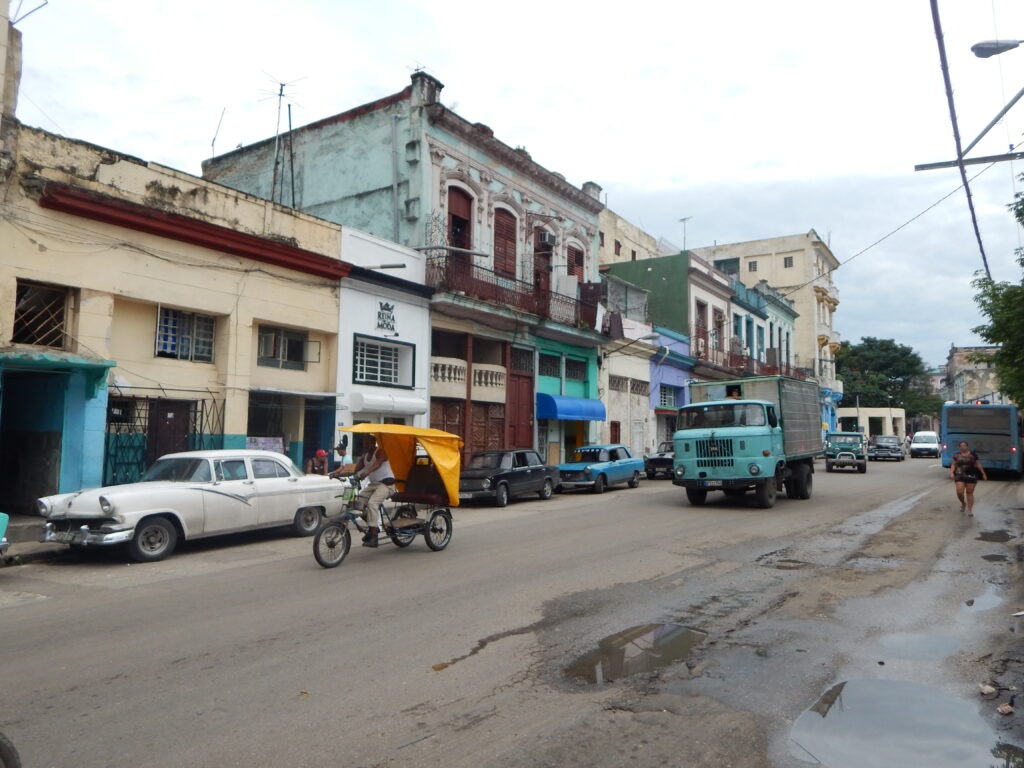
Calle Aguila, Havana, photographed in May 2018. This historical streetscape does not show present-day conditions. Image source. Raf24~commonswiki / Wikimedia Commons. CC BY-SA 4.0. Uncropped; automatically resized for web display.

Havana’s buildings tell a remarkable history. The harder question is how to preserve them without turning the people who live among them into an afterthought.
A postcard can tell you what a city looks like. It cannot tell you who gets to feel at home there.
That distinction matters in Havana, where architectural beauty is inseparable from a more complicated story about housing, public space and the uses of history. Looking beyond the familiar images does not mean dismissing the city’s monuments. It means asking what they protect, what they leave out, and how the streets around them continue to function as somebody’s neighbourhood.
Searching for a supposedly untouched Havana behind the tourist version would only replace one romantic image with another. Preservation and everyday life have to negotiate with each other; that relationship is more revealing than either romantic picture.
A port, not a stage set
Havana’s historical importance begins with its harbour. UNESCO’s account of Old Havana explains how the Spanish fleet system helped make it a major port in the second half of the sixteenth century. By the seventeenth century, the city was also an important Caribbean shipbuilding centre. Successive fortifications protected the port and its dockyards, turning the entrance to the bay into a defended imperial gateway.
Those structures are more than picturesque silhouettes. They are evidence of the resources and military organisation invested in controlling maritime routes.
Inside the old city, UNESCO identifies a different kind of continuity: the relationship between plazas, narrow streets, monumental buildings and ordinary houses. Balconies, arcades and courtyards matter alongside churches and palaces. The heritage is an urban arrangement, not simply a collection of exceptional façades. UNESCO World Heritage Centre
Nor is Old Havana the whole of Havana. In a 2019 UNESCO interview, historian Eusebio Leal described architectural layers extending from the historic centre into Centro Habana and the modern city. His examples ranged from baroque and neoclassical buildings to Art Nouveau, Art Deco and modernist architecture. The city he described was not frozen in a single colonial moment. UNESCO interview
What restoration is meant to restore
The ambition of Havana’s preservation programme has been broader than repairing decorative stonework.
Writing in the UNESCO Courier in 2019, Jasmina Šopova described a model linking restoration with vocational education, neighbourhood services and social institutions. Tourism helped generate resources for that work. Schools, care facilities and housing formed part of the account, alongside restored buildings and cultural venues. The UNESCO Courier
That is an important distinction. A restored building can become a museum, a workplace, a home or a business; its appearance alone does not tell us which public need it serves. The same conservation project may protect architecture, create employment and change the balance of activity on a street.
Leal acknowledged the tension. In his 2019 interview, he defended tourism’s economic and cultural possibilities while warning against letting visitors overwhelm Havana. He also resisted the idea that the city should become merely a museum. These were the stated ambitions of an influential preservation leader, not proof that every project fulfilled them.
Whose square is it?
Independent research complicates the reassuring picture of restoration benefiting everyone equally.
A 2019 study by Niklas Völkening, Andreas Benz and Matthias Schmidt examined tourism-related transformation in Old Havana. It found that renewal could favour visitor-oriented uses over residents’ needs, even while some residents benefited. Its findings concern the period studied, not business or housing conditions in 2026. ERDKUNDE research
Joanna Kocsis approached the question through young people’s use of neighbourhood space. Her study, first published online in 2024, drew on fieldwork with Afro-Cuban teenagers between 2016 and 2019. It identified enclosure, sanitisation and temporary appropriation of public space as processes reducing places available for social life. The research also distinguished this loss of usable space from straightforward displacement out of housing. Places to be young: The dispossession of public space in Old Havana — Urban Studies 62(2), 2025
The distinction is revealing. Remaining at the same address does not necessarily mean retaining the same relationship with a neighbourhood. A square may remain publicly visible while becoming harder to use without spending money or feeling out of place.
Repairing buildings remains essential. Judging conservation also requires attention to how the surrounding space can be used.
The work outside the frame
Preservation also depends on skills that a postcard rarely records.
UNESCO’s 2020 account of plans for the former Santa Clara Convent described a restoration college intended to serve Cuba and the wider Caribbean. The proposed training connected work on buildings with the conservation of objects and materials, making heritage a field of learning as well as something to display. That account documents the project’s intention at the time, not its present operating status. UNESCO’s Santa Clara account
An old building carries a continuing responsibility: someone must understand its materials, maintain it and decide how it can be used.
Havana deserves attention for its extraordinary architecture. It deserves equally careful attention to the people whose needs cannot be reduced to an architectural view. Preserving a city should leave room for it to remain a home.